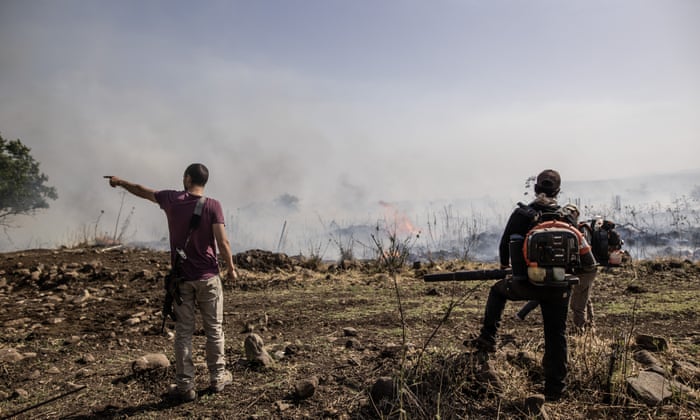
Israel’s Iron Arch enemy of rocket batteries risk being overpowered in the initial strikes of any essentially heightened struggle with Hezbollah.
The evaluation conveyed by US authorities toward the end of last week, repeating ongoing examination by specialists in Israel and the US, comes in the midst of fears that a conflict with Hezbollah could be an undeniably more risky endeavor than the overwhelming 2006 second Lebanon war, while Israeli bombarding caused gigantic obliteration in Lebanon.
The US and France are driving political endeavors to deflect a more extensive clash among Israel and Hezbollah, in the midst of fears that raising manner of speaking and trades of fire across the line could prompt full-scale war.
On Friday, Kuwait’s unfamiliar service cautioned its residents to try not to go to Lebanon and encouraged those generally in the country to leave. There are likewise reports that authorities in the Biden organization told an Israeli designation in Washington that America would offer security help with the occasion of a more extensive clash, while António Guterres, the Unified Countries secretary general, called for “reason and sanity” to stay away from possibly devastating ramifications for the locale and the world.
Beginning around 2006, Hezbollah, the world’s best-furnished non-state bunch, has essentially extended its stockpile and capacities, including procuring self destruction drones which Israel has battled to counter, an enemy of airplane rocket capacity and a broadly extended exhibit of rockets which specialists currently trust number somewhere in the range of 120,000 and 200,000.
While Hezbollah’s overall secretary, Sayyed Hassan Nasrallah, has said his gathering can rely on 100,000 outfitted men, its center military strength likely sums to around 33% of that, yet with a huge number having had battle insight in Syria.
It is the size of Hezbollah’s rocket weapons store, notwithstanding, and a functional regulation for their utilization in a significant struggle with Israel, that is probably going to most test.
While most of Hezbollah’s store includes a huge number of unguided rockets – both short and long reach – beginning around 2006 it has obtained many directed long range rockets, with the capacity to fire them from solidified dugouts and from portable launchers.
Convoluting the issue has been Hezbollah’s expanding and successful utilization of robots, including kamikaze weapons, which Israel’s current air safeguards have battled to counter.
A three-year research project by Reichman College’s Organization for Counter-Psychological warfare in Israel, finished not well before the Hamas assault on 7 October, closed Hezbollah could start up to 3,000 rockets every day, a rate that could be supported for as long as three weeks. Its key point is force the breakdown of Israel’s air guards.
“The assumption for general society and of a huge piece of the administration, that the Israeli Flying corps and viable Israeli knowledge frameworks will prevail with regards to forestalling the greater part of the rocket assaults on Israel, will be broken,” the report said. “This is likewise the case with respect to the public’s conviction that the danger of Israeli reprisal or a significant Israeli assault on critical Lebanese resources will drive Hezbollah to stop fire or essentially debilitate their capacity to keep a going after Israeli area.
 Al Gaza
Leave a comment